
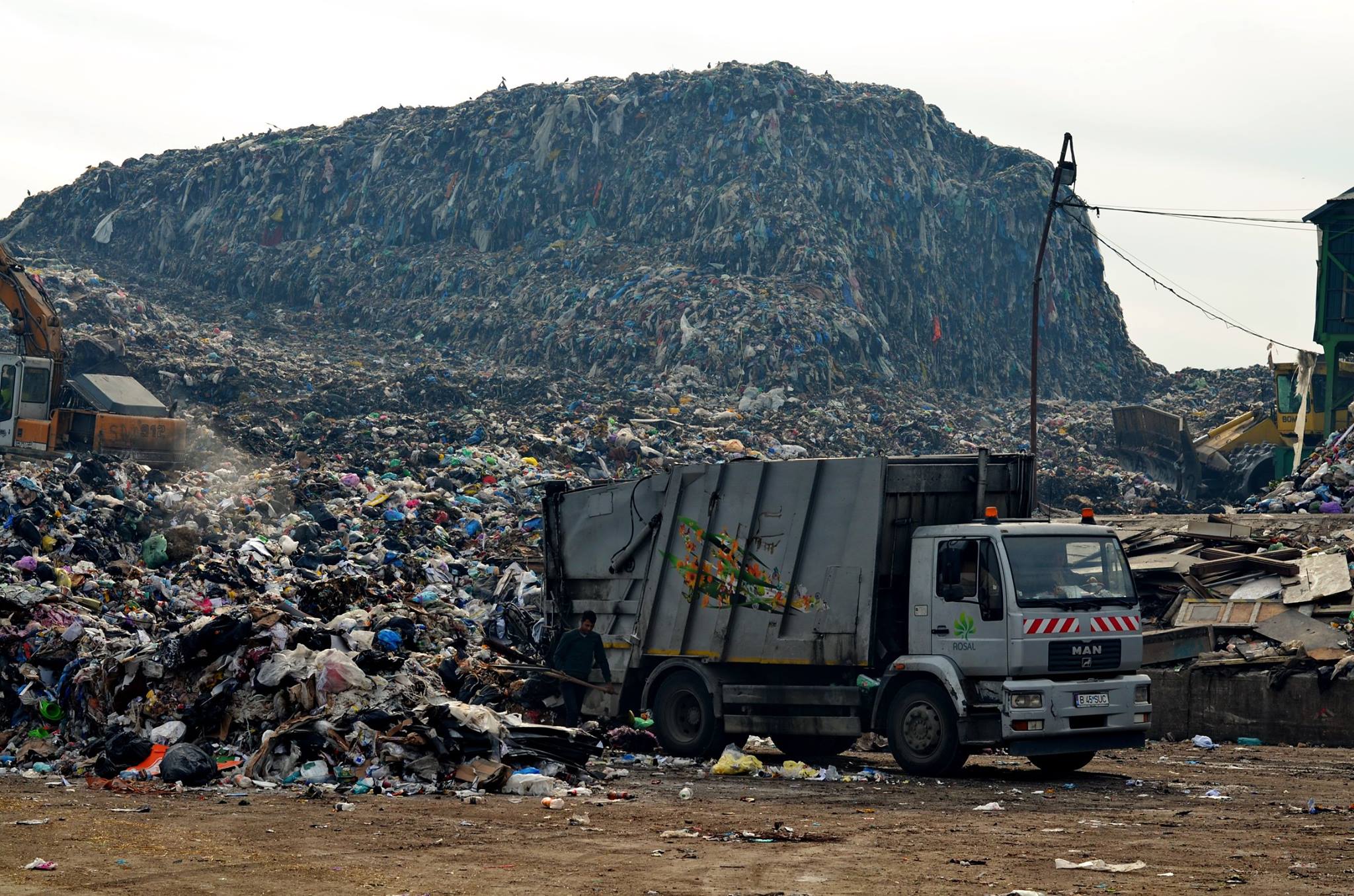
Methane from european landfills is a long-term climate factor
Landfills containing biodegradable waste generate methane through anaerobic decomposition. This biological process does not stop when a landfill closes. It continues for years, sometimes decades, releasing methane gradually into the atmosphere.
The Prognos study on methane emissions from european landfills shows that this delayed emission pattern creates structural inertia. Even if landfill input declines rapidly in the coming years, methane already stored in existing deposits will continue to be released.
Methane is particularly relevant in climate discussions because of its high warming impact over shorter time frames. Although its atmospheric lifetime is shorter than carbon dioxide, its short-term warming potential is significantly stronger.
Where methane emissions from european landfills are concentrated
The distribution of methane emissions across europe is uneven. Countries that rely heavily on landfilling municipal waste contribute a larger share of emissions from the waste sector.
The Prognos analysis highlights that member states with high landfill rates generate disproportionately high methane emissions compared to countries that prioritize recycling, composting, or waste-to-energy systems.
This geographical imbalance is not incidental. It reflects differences in infrastructure, historical waste management policies, and the pace of transition toward circular economy models.
Countries that have already reduced landfill dependence face a lower projected methane burden in the coming decades. However, even these states must manage emissions from older landfill sites.
A significant portion of emissions will occur after 2050
One of the most critical findings of the Prognos study is that approximately 37 percent of cumulative methane emissions linked to waste already deposited will be released after 2050.
This means that a large share of future methane emissions is effectively locked in. Even if landfill disposal of biodegradable waste were drastically reduced today, the climate system would still receive methane from historical deposits.
This projection has direct implications for european climate targets for 2030 and 2050. Waste management decisions made in previous decades continue to shape emission trajectories far into the future.
Scenario modelling shows limited short-term reversibility
The study evaluates different waste management scenarios, including accelerated landfill reduction pathways. While reducing new landfill input significantly lowers long-term emission curves, it does not eliminate the legacy effect.
Under a business-as-usual scenario, methane emissions from european landfills remain elevated for several decades. Even under more ambitious reduction scenarios, emission declines are gradual rather than immediate.
This delayed response distinguishes landfill methane from other sectors where mitigation measures can produce faster emission reductions.
Landfill gas capture reduces but does not eliminate emissions
Landfill gas capture systems play an important role in mitigation. However, the Prognos study makes clear that capture efficiency is never complete. Technical limitations, infrastructure gaps, and leakage mean that a portion of methane inevitably escapes.
Older landfill sites are particularly challenging, as they may lack advanced gas collection systems. Even modern facilities cannot achieve full containment.
As a result, reducing landfill dependency remains the structurally most effective way to limit future methane emissions from the waste sector.
Why this matters for european climate policy
Methane emissions from european landfills illustrate how climate mitigation is influenced by past infrastructure decisions. A substantial portion of future emissions is determined by waste already deposited.
The uneven distribution of landfill methane across europe also highlights structural differences between member states. Countries that delay transition toward recycling and diversion strategies face a longer-term methane burden.
Landfill methane is not a temporary fluctuation. It is a long-term emission source embedded in europe’s waste management system, with consequences extending well beyond mid-century.